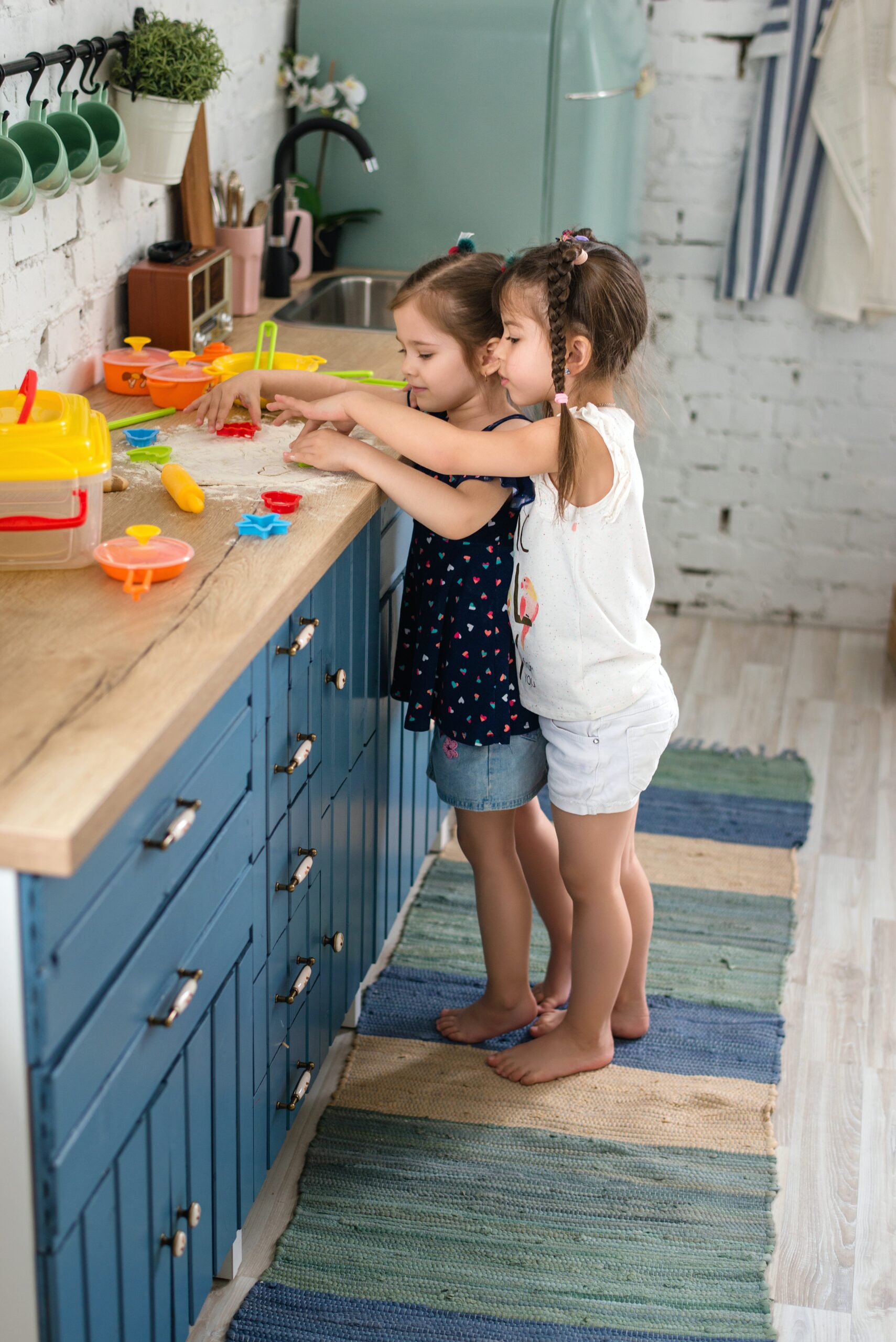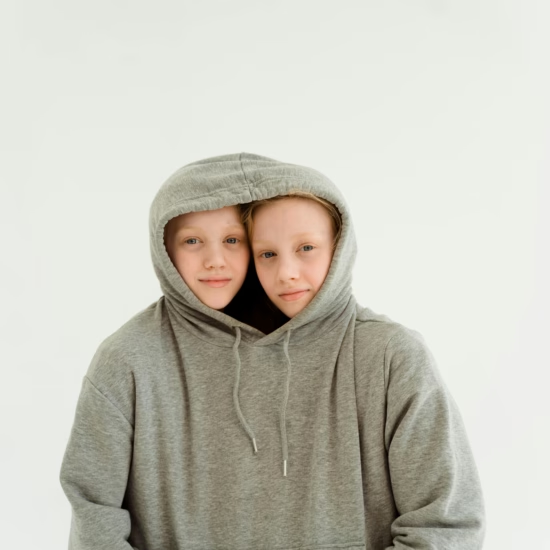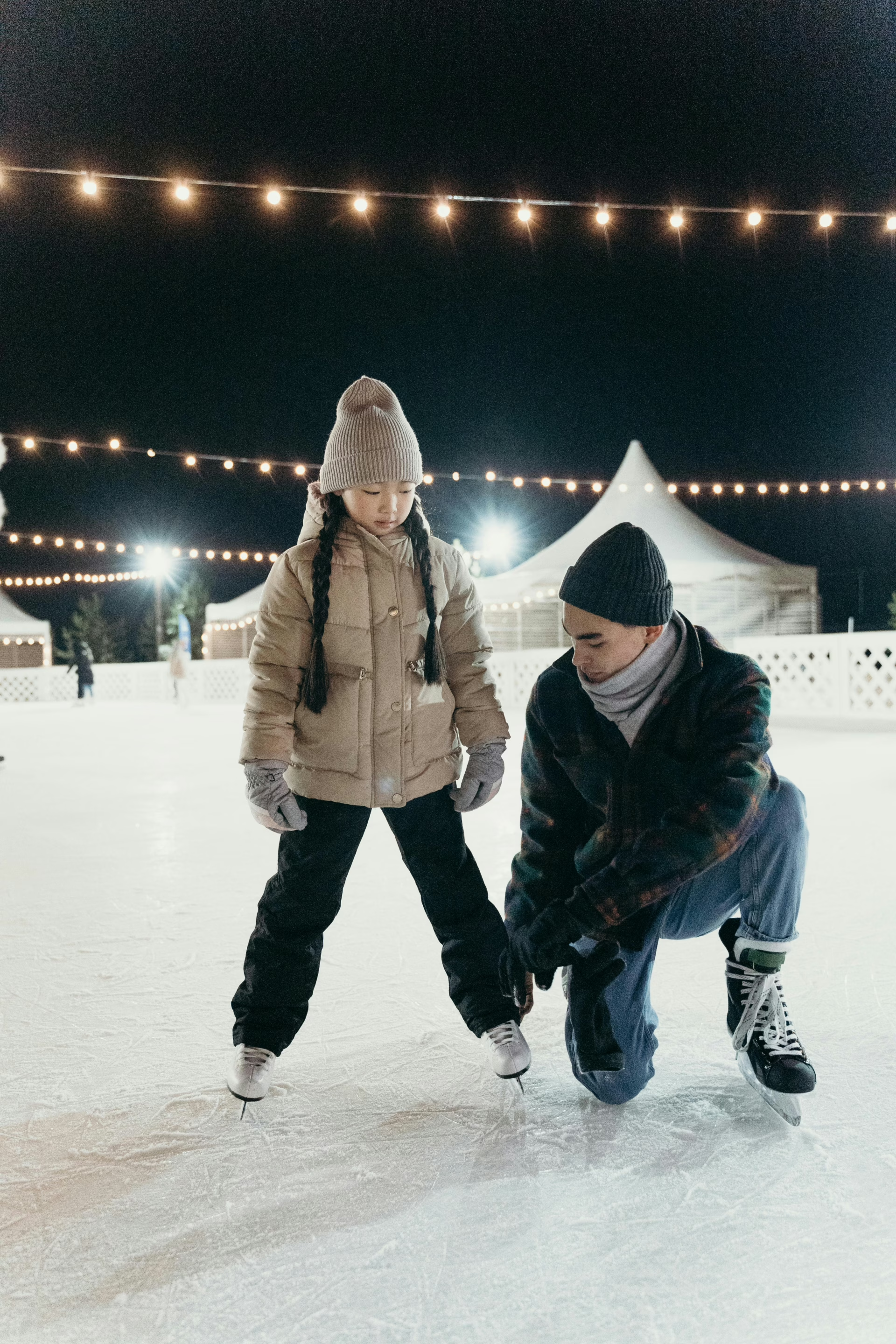
In February, the world gathers around their screens to watch the Winter Olympics. As a parent of autistic twins, you must wonder how these athletes handle participating in high-speed, technical sports. Instead, your days are defined trying to keep everyone calm and fed! But did you know that winter sports could be just the activity that your autistic triplets are looking for?
While traditional team sports like soccer or baseball often rely heavily on social communication, unpredictable physical contact, and overwhelming auditory environments, winter sports lean into individual mastery, rhythmic repetition, and “heavy work” for the sensory system. By understanding the science behind why these activities work, families can unlock a new world of regulation and confidence for their children.
The sensory sanctuary of winter
One of the most immediate benefits of winter sports lies in the environment itself. For many autistic individuals, the “summer” world is a land of sensory landmines. The feeling of humid air, the stickiness of perspiration, the smell of sun-drenched grass, and the blinding glare of a high-summer sun can lead to rapid cognitive fatigue. In contrast, the winter landscape offers a natural “dampening” effect. Snow is a world-class acoustic insulator. On a ski hill, the chaotic noise of a city or a crowded gym is replaced by a muffled, low-frequency soundscape. This reduction in “auditory clutter” allows an autistic twin’s brain to dedicate more bandwidth to motor planning and balance rather than filtering out background noise.
Furthermore, many neurodivergent children struggle with interoception, the internal sense that tells us when we are hungry, thirsty, or—most importantly—overheating. Chronic overheating is a common trigger for irritability in autistic children. The crisp, cold air of an ice rink or a snowy trail acts as a natural cooling system, helping to regulate the body’s core temperature and providing a sharp, alerting stimulus that can improve focus. For twins, who often feed off one another’s emotional energy, having a calm and cool environment can prevent the “sympathetic resonance” where one twin’s heat-induced meltdown triggers the other.
The power of proprioception and “heavy work”
To understand why sports like downhill skiing, ice hockey, and figure skating are so effective, we must look at the proprioceptive system. This is the sensory system located in our muscles and joints that tells us where our body is in space. Many autistic children are “sensory seekers” when it comes to proprioception; they need deep pressure and heavy resistance to feel grounded and “organized” in their own skin. In the world of occupational therapy, this is known as “heavy work.”
Winter sports are, by their very nature, a masterclass in heavy work. Consider the equipment alone. A pair of ski boots provides significant compression around the feet and ankles, acting almost like a weighted garment. The act of pushing against the resistance of the snow or carving an edge into the ice requires intense muscle activation. This deep pressure sends calming signals to the central nervous system. When an autistic child glides across the ice, the rhythmic “push-glide” motion creates a predictable, organizing loop of sensory input. For twins, who may have spent their early years navigating shared space and perhaps struggling with body boundaries, these sports provide a way to feel their own physical autonomy in a way that is deeply satisfying and neurologically stabilizing.
Navigating the “double” dynamic
Raising twins on the spectrum presents a unique challenge: how do you foster individual growth when the children are so often grouped as a unit? Winter sports are uniquely suited to this dilemma because they are largely “individual sports performed in a shared space.” In a basketball game, if one twin struggles with the social complexity of passing or the sensory shock of a whistle, the game is interrupted. In skiing or ice skating, twins can be on the ice or the mountain at the same time, sharing the excitement of the outing, yet remaining entirely focused on their own internal physical experience.
This allows for “parallel play” on a grand, athletic scale. One twin might be a sensory seeker who loves the high-speed vestibular input of a downhill run, while the other might be a “sensorimotor” learner who prefers the precision and geometry of figure skating edges. They can be supported by the same family structure and visit the same venues, yet their individual “sensory diets” are being met in different ways. This reduces the competitive friction that can sometimes occur in team-based environments and allows each child to build a sense of mastery that is not dependent on the other’s performance.
Predictability and the joy of technical mastery
The autistic brain often finds comfort in systems, patterns, and predictability. The Winter Olympics are a celebration of these very things. Whether it is the specific routine of “kicking in” to a ski binding or the geometric precision required to execute a perfect circle on the ice, these sports are governed by clear physical laws and repetitive motions. There is a beginning, a middle, and an end to a skating lap or a ski run. This structure provides a sense of safety for children who find the “unwritten rules” of social sports confusing.
For twins, these routines can be turned into a shared family language. The ritual of getting dressed in layers, checking equipment, and following a specific trail map provides a “scaffolded” experience that reduces anxiety. When the world feels unpredictable, the gravity-fed logic of a ski slope or the friction-less reality of an ice rink offers a world that finally makes sense. The child isn’t fighting against a confusing social web; they are working with the laws of physics.
Taking the first step
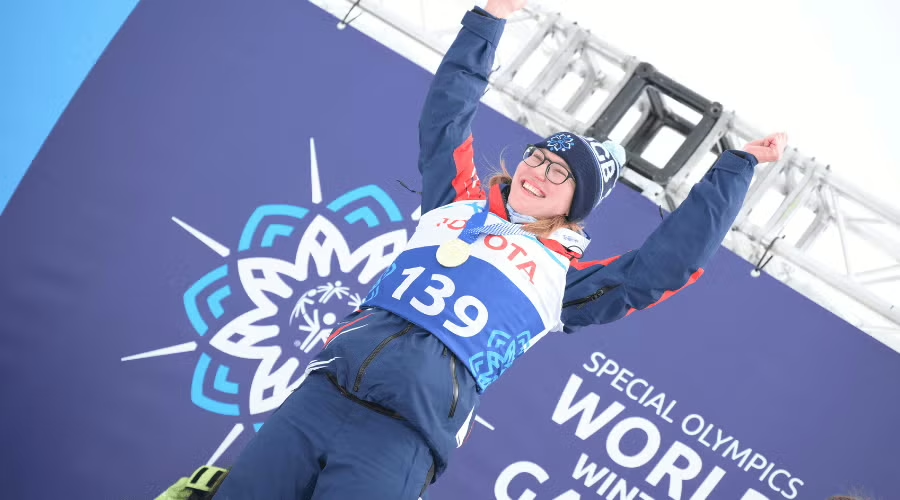
Watching the Olympics can be the spark that ignites a new passion. The key is to seek out adaptive programs that understand neurodiversity. Many ski mountains now offer adaptive lessons where instructors use visual schedules, “tethers” for safety, and sensory breaks to ensure the child feels successful. Similarly, many community rinks offer “sensory-friendly” skating hours where the bright lights are dimmed and the music is turned off.
It is also important to manage expectations and celebrate “micro-wins.” For some twins, a successful day might simply mean getting the boots on and standing on the snow for ten minutes. For others, it might be the thrill of their first independent glide. Because neurodivergent children often have uneven “spiky” profiles of ability, one twin might progress faster than the other. In the world of winter sports, this is perfectly okay. The goal isn’t a gold medal; the goal is a regulated nervous system, a stronger heart, and the sheer, unbridled joy of movement.
Healthy hearts
Because February is also about heart health, engaging in these “heavy work” sports is one of the best ways to support the cardiovascular health of both the child and the parent. For parents, being outdoors and moving alongside your autistic twins provides a much-needed hit of endorphins and a break from the “fight or flight” stress of indoor advocacy. For the twins, it builds the foundation of a healthy lifestyle that respects their sensory needs.
This February, as we watch the Winter Olympics, think about how your own children benefit from winter sports. Do your autistic twins participate in winter sports? Share your stories in the comments below.
Subscribe for the latest news and updates!
This website uses affiliate links. We may make a small commission from purchases when you use these links, at no additional cost to you. We sometimes use AI to streamline content creation, allowing for the rapid production of high-quality content tailored for our audience.