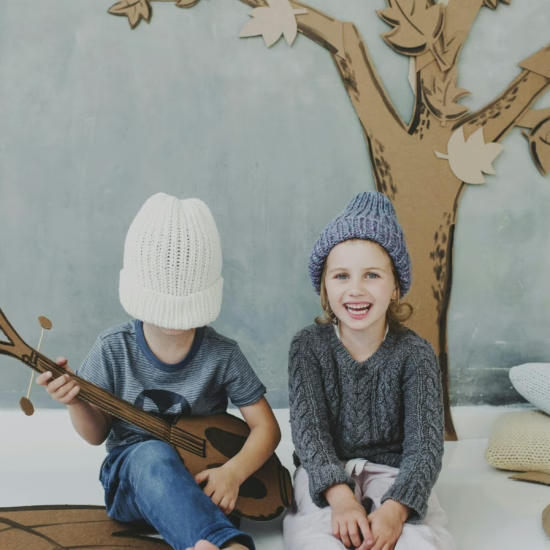
Watching your autistic twins grow up is full of surprises, including navigating two very different ways of seeing the world. You might find that your twins have play styles that seem to clash. One twin might love to run, jump, and interact, while the other finds peace in lining up blocks or watching a fan spin. It is common for parents to wonder how to help their children bond when they play so differently.
At Autistic Twins Triplets and More, we believe that connection is not about making everyone play the same way. Instead, it is about celebrating how each of your children learns and grows. We want to help you understand autistic play, set up a home that works for everyone, and find simple ways to foster a deep bond between your twins.
Understanding autistic play
The first step in helping your autistic multiples is to change how we look at play. For a long time, people thought that “good” play always meant playing together and sharing toys. However, for autistic children, play is often a way to help their bodies and brains feel good. This is called self-regulation.
When an autistic child lines up their cars, they are not just being “stiff.” They are finding order and calm in a busy world. When they spin a wheel or touch a fuzzy blanket for a long time, they are exploring their senses. This is often called “flow.” It is a state where the child is very focused and happy. If we try to stop this play to force them to “play right,” we might actually make them feel stressed.
Twins are often compared to one another, but it is important to remember that every autistic person is different. One twin may be “associative,” meaning they like to be near others and share some parts of a game. The other may be “solitary,” meaning they need to be alone to feel safe. Both of these styles are okay! Our goal is to bridge the gap between these two worlds without forcing either child to change who they are.
The magic of parallel play
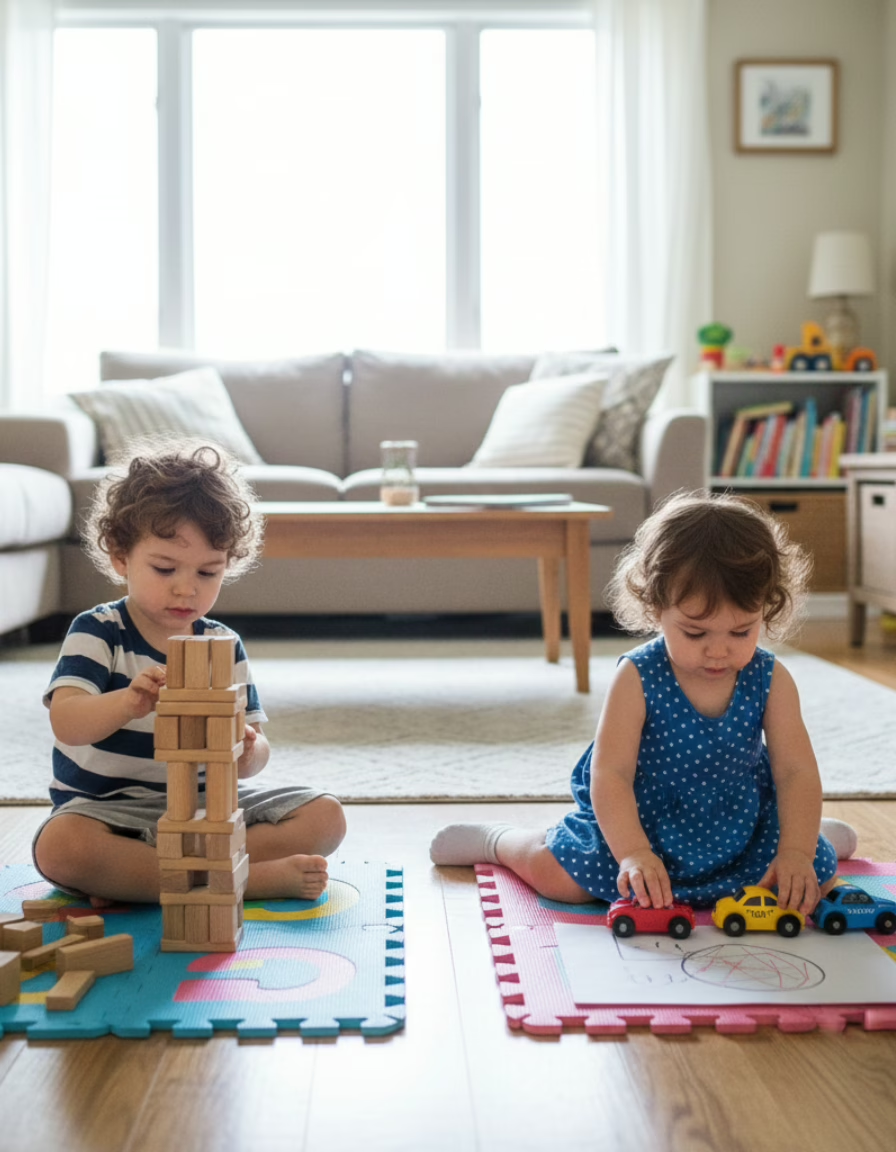
Many people think that playing alone is a bad thing, but for autistic twins, “parallel play” is a powerful tool for friendship. Parallel play means two children are playing in the same area, but they are working on different things. They are “alone together.” This is a very respectful way to be friends. It lets them enjoy each other’s company without the pressure of talking or sharing.
How to encourage being near each other
You can help your twins practice parallel play by creating “intentional proximity.” This means you help them sit near each other on purpose. If one twin is on the floor playing with a puzzle, you can invite the other twin to sit a few feet away with their own toys. They don’t have to work on the same puzzle. Just being in the same space is a big win.
As a parent, you can help by narrating what you see. Use simple words to describe their shared space. You might say, “Look at you two! You are both playing on the soft rug. You are building a house, and your brother is looking at his book.” By saying this, you are telling them that they are a team, even if their hands are doing different things. You are pointing out their connection without asking them to change what they are doing.
Stimming together
Another way to use parallel play is through “stimming” or sensory play. “Stimming” is short for self-stimulatory behavior, like flapping hands or rocking. It helps autistic children process their feelings. You can find activities where they can stim near each other. For example, you can give them each their own bin of kinetic sand. One child might like to squeeze it, while the other likes to watch it fall. They are having the same sensory experience at the same time, which creates a quiet, shared bond.
Setting up a dual-focused play space
The way you arrange your home can make a huge difference in how your twins get along. A “dual-focused” play space is a room that is designed to help two different play styles happen at the same time. This reduces fighting and helps everyone feel calm.
Creating specific zones
A great idea is the “Zones.” You can set up two different areas in one room. One area should be a “Quiet, Focused Zone.” This spot should have low lights, soft pillows, or a weighted blanket. It is for the twin who needs to play alone to stay calm. The other area can be a “Shared Zone” with a table for art or a big rug for building blocks.
By having these two spots in the same room, the twins can be near each other while still having their own safe space. The twin who likes to play alone can look up and see their sibling, which feels good, but they don’t have to worry about their sibling grabbing their toys.
Using visual boundaries
Sometimes, autistic children have a hard time knowing where their space ends and their sibling’s space begins. You can use visual boundaries to help. This can be as simple as putting down two different colored rugs or using masking tape to draw a line on the floor. These lines act as “fences” for their toys. It tells the children, “This is my space to build, and that is your space to build.” When children feel that their toys are safe, they are much more likely to stay calm and play near their sibling for a longer time.
Finding shared interests
Even if your twins play differently, they might still like the same things. Maybe they both love dinosaurs, or space, or the color blue. These shared interests are like a bridge that connects their two worlds.
The shared research project
You can turn a shared interest into a “team project” where everyone has a job that fits their style. Let’s say your twins both love trains. The twin who likes solitary, focused play can be the “Organizer.” Their job is to sort the trains by size or color or to look at a book about how trains work. The twin who likes interactive play can be the “Conductor.” Their job is to build the track and move the trains around.
They are both working on the “Train Project,” but they are doing it in ways that make them happy. They are helping each other without even knowing it! This takes away the stress of “playing together” and replaces it with the joy of a shared goal.
Low-demand activities
It is also helpful to pick activities that don’t require a lot of talking. These are called “low-demand” tasks. High-demand tasks, like playing a board game with lots of rules, can be very stressful for autistic children. Low-demand tasks, like playing with a water table or blowing bubbles, are much easier. Both twins can stand at the water table and splash. They don’t have to talk or take turns to have fun. They just get to enjoy the water together.
Creating a culture of support
The most important thing you can do as a parent is to stay positive and patient. Success with autistic twins looks different than it does with other children. We have to celebrate the small things.
Putting calm first
In your house, being calm should always be more important than playing together. If one of your twins is feeling overwhelmed or “dysregulated,” it is okay to let them be completely alone. A child who is stressed cannot learn how to be a good sibling. Once they are calm and their body feels good, they will be much more open to sitting near their twin.
Modeling respect
Your twins are watching you. You can show them how to respect different play styles by doing it yourself. When you sit down to play, don’t immediately try to change what they are doing. If one twin is spinning a coin on the floor, sit down and watch with interest. You might even spin a coin too. This shows them that their way of playing is important and cool. When your twins see you respecting their “flow,” they learn to respect each other’s flow, too.
Celebrating micro-connections
In a house with autistic twins, we look for “micro-connections.” These are tiny moments of love that might be easy to miss if you aren’t looking. A micro-connection could be:
- A quick glance at each other while they are eating a snack.
- Laughing at the same funny noise on a TV show.
- Sitting back-to-back while they both play on their own tablets.
- One twin bringing a toy near the other without saying a word.
Helping autistic twins with different play styles has a deep learning curve for everyone involved. There will be days that feel hard, and that is okay. The key is to remember that there is no “right” way to play. By using parallel play, setting up a smart environment, and following their interests, you are creating a home where both of your children can shine. You are not just a parent; you are helping your twins find their way to each other.
Have you helped your autistic twins play together? Share your ideas and stories in the comments.
Subscribe for the latest news and updates!
This website uses affiliate links. We may make a small commission from purchases when you use these links, at no additional cost to you. We sometimes use AI to streamline content creation, allowing for the rapid production of high-quality content tailored for our audience.