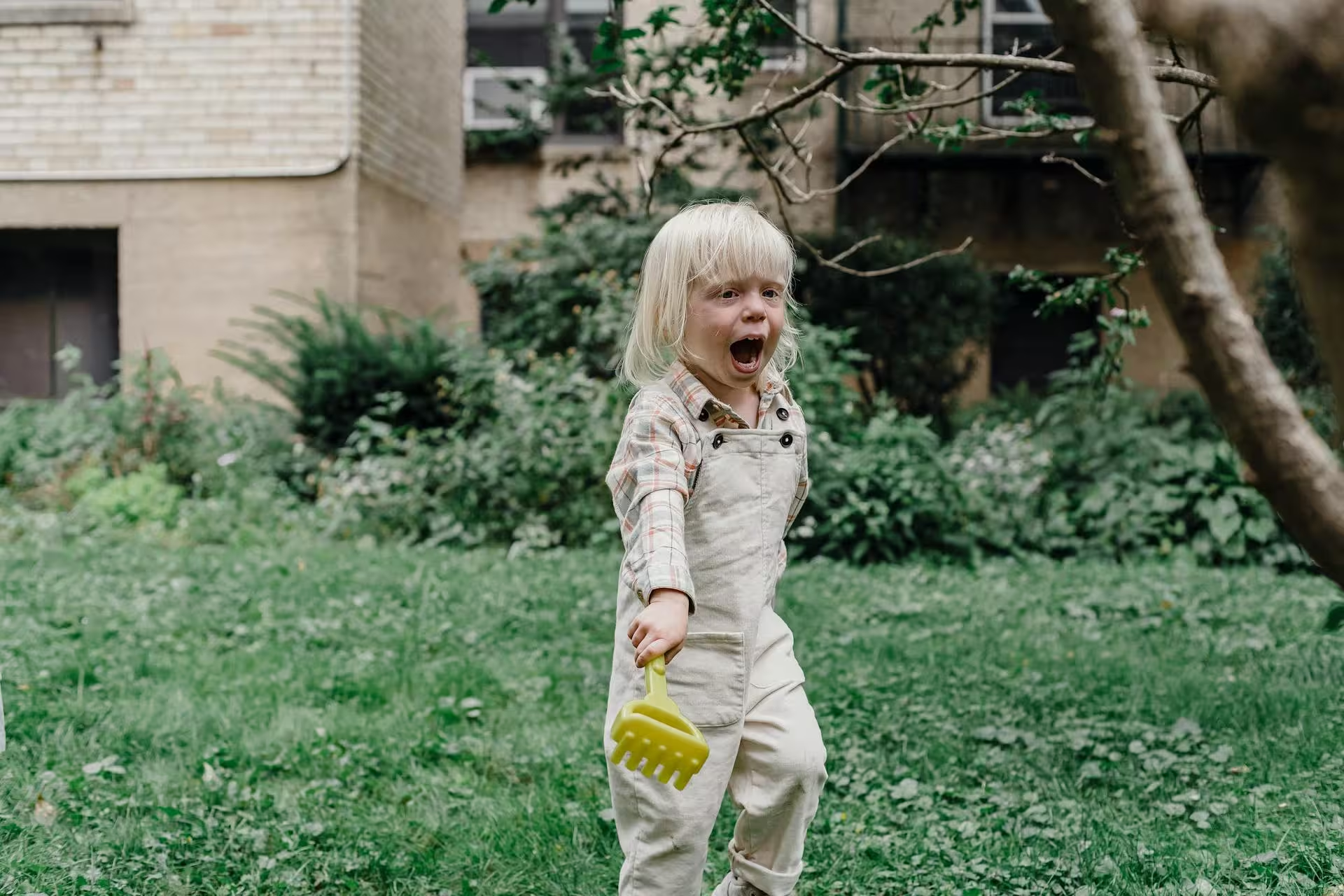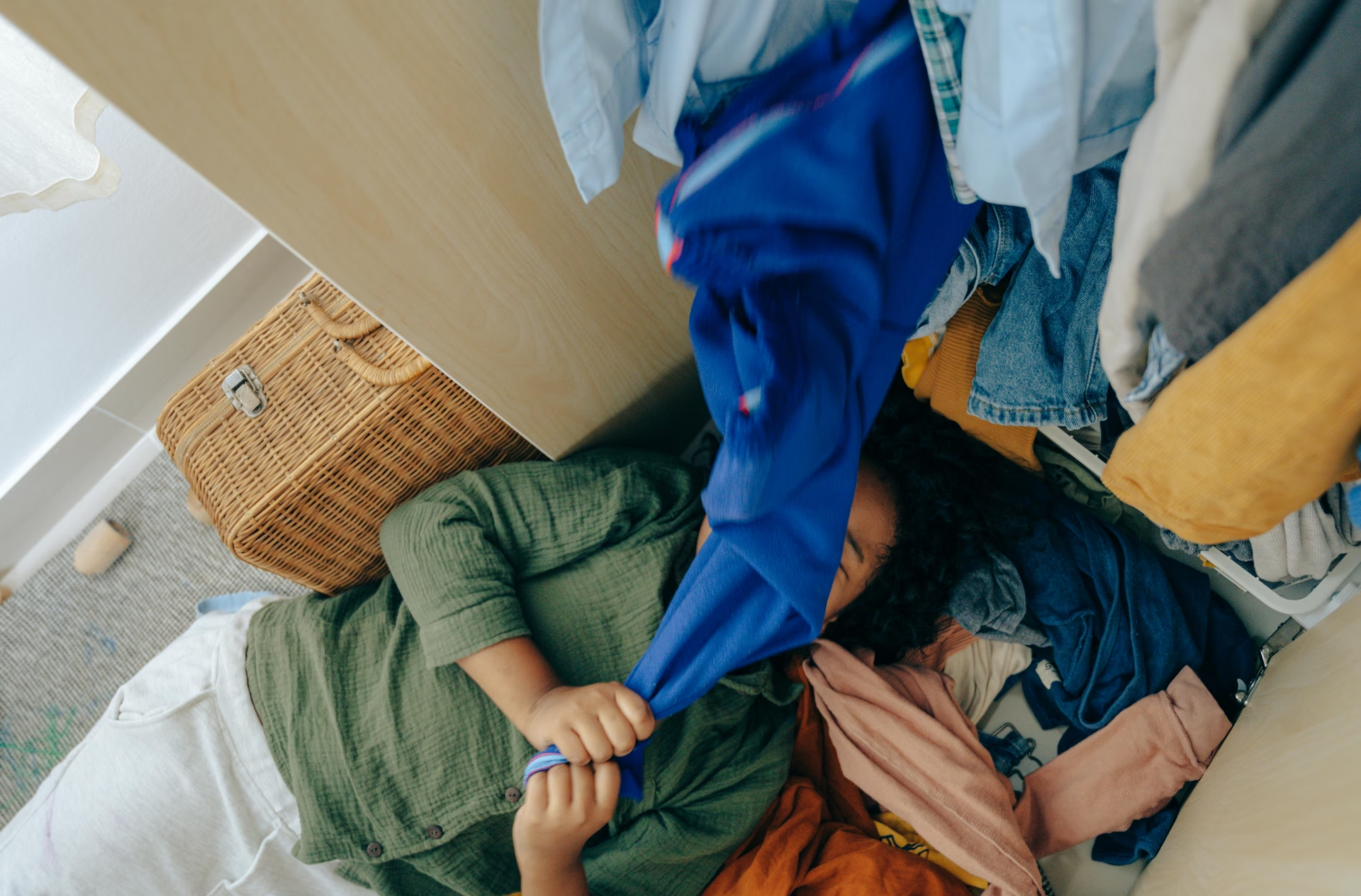
If you walked into an autistic twin house on any given Tuesday, you might find a trail of sensory beads leading to the kitchen, a pile of laundry that has become a “nest,” and a collection of singular socks looking lost and forlorn in the laundry room.
Clutter is a challenge for any household, but when you are raising autistic twins, triplets, or more, the “stuff” in your home isn’t just a mess—it’s a sensory landscape. For our children, visual noise can be just as deafening as a physical siren. Excessive visual stimulation can lead to anxiety, sensory overload, and the kind of meltdowns that leave everyone exhausted by 9:00 AM.
But why does it feel like autism and clutter go hand-in-hand? And more importantly, how do we manage it without losing our minds (or our children’s favorite treasures)?
Why do autism and clutter go together?
Before we can “fix” the clutter, we have to understand the why behind it. Our children aren’t being “naughty” or “messy” on purpose. Their brains interact with physical objects differently than neurotypical brains.
Most autistic multiples face significant challenges with executive functioning. This is the “brain’s CEO”—the part that handles planning, organizing, and decision-making. For a neurotypical person, putting a toy back in a bin is one step. For an autistic child, it involves:
- Deciding the play is over.
- Identifying where the toy belongs.
- Physically moving the toy.
- Overcoming the transition from one activity to the next.
When you multiply this by two or three children, you have a recipe for organizational gridlock.
Monotropism—the tendency to focus intensely on one thing—means that our kids often have “collections.” Whether it’s 400 plastic dinosaurs, every specific piece of a marble run, or a stack of specific cardboard boxes, these items are meaningful. They are tools for regulation and joy. However, when these collections expand, they contribute to a heavy visual load.
Ever walked in to find your twins have dumped every single toy box on the floor? It looks like chaos, but to them, it might be the “crash” of toys hitting the floor provides auditory feedback. Or it could be the tactile feeling the weight of the items on their legs. Or maybe it’s just visual, being able to see everything at once so they can choose exactly what they need. This might also be related to object permanence, they forget about items that are not right in front of them. And finally, some autistic twins use clutter to “nest,” surrounding themselves with items to feel secure and grounded.
How to help reduce clutter
When approaching decluttering with autistic multiples, we have to be sympathetic. We aren’t trying to create a “Show Home”; we are trying to create a “Calm Home.” Overall, it’s important to remember that they are not being messy on purpose or willfully ignoring you.
Start by decluttering when the kids aren’t around if they are prone to “hoarding” behaviors, but involve them if they are at a stage where they can understand the concept of “donating.” For example, start with items they haven’t touched it in six months. Just like in Toy Story, we can help move toys on to new homes where they can be played with again. You might also notice you have two (or three!) of many items. Are your twins still at a stage where sharing is tough, or will one item work now?
Keep things functional, focusing on how it works instead of how it looks. A perfectly styled home may look great in a magazine, but for autistic twins it’s more important to have a functional and calming environment. Even down to the furniture and colors for walls, your design choices can help improve calm and reduce visual overstimulation.
Clear storage bins are great because your autistic twins can actually see what is inside. Labeling toy bins is helpful, and you can use both words and pictures. If a bin has a photo of a block on it, the executive functioning load of “where does this go?” is instantly halved. If Twin A loves blue and Twin B loves red, use colored bins to separate whose “stuff” is whose. This reduces arguments and helps them take ownership of their own space.
You can also consider zones instead of a general “toy area”. For example, you might have a High-Energy Zone, which includes a crash mat or mini-trampoline. Another area could be the Quiet Zone – a “dark den” or tent with minimal items inside. Or an area specific to creativity or especially for their special interests. By zoning the room, you help their brains understand what behavior is expected in each physical space.
The flip side: The rigidly organized twin
If you have a twin who is hyper-organized or has OCD-like tendencies regarding their environment, there are ways you can help. If your child finds peace in lining up cars, that isn’t clutter—it’s regulation. Give them a dedicated shelf or “safe zone” where their siblings aren’t allowed to touch or move their items. Help your more organized twin by using “Wait” cards or visual timers if a mess needs to stay out for a short period. This helps them build flexibility in a controlled way.
You may find that one twin needs order and the other needs to explore through “mess”. In these instances, sharing a bedroom can be a source of constant stress for everyone. If it’s not possible for them to have separate rooms, use room dividers or separate rugs to define “My Space/Your Space.”
Make it a family affair
Decluttering shouldn’t be a punishment; it should be presented as a way to make the house “feel better.” Where possible, you can make decluttering a family affair. Involve your children in the process. This can help them develop organizational skills and foster a sense of ownership in their living space.
To make clean up time more fun, you can use a song or visual timer. Or make it a collaborative (not competitive!) race. “Can we get all of the blocks picked up before the timer beeps? Also remember that executive functioning challenges make an instruction like “clean your room” too big and overwhelming. Instead, ask them to “put three toys in the box”. Smaller tasks are much easier to process. You can also build a 5 minute reset into your routine, before dinner for example. It’s not about perfection! It’s about putting things back where they belong so we can move around safely and find them next time.
Final thoughts
Our homes are the containers for our children’s lives. If those containers are overflowing, it’s hard for anyone to breathe, let alone thrive. By understanding the autistic reasons behind the mess, we can move away from frustration and toward a home that supports everyone’s needs. It won’t happen overnight. Some days, the clutter will win. And that’s okay. On those days, close the door to the playroom, put the kettle on, and remember: you are doing a great job navigating a very complex, very “full” life.
What are your top tips for an organized autistic twin home? Do you have one “collector” and one “minimalist”? Share your stories and your best “clutter hacks” in the comments below!
Subscribe for the latest news and updates!
This website uses affiliate links. We may make a small commission from purchases when you use these links, at no additional cost to you. We sometimes use AI to streamline content creation, allowing for the rapid production of high-quality content tailored for our audience.