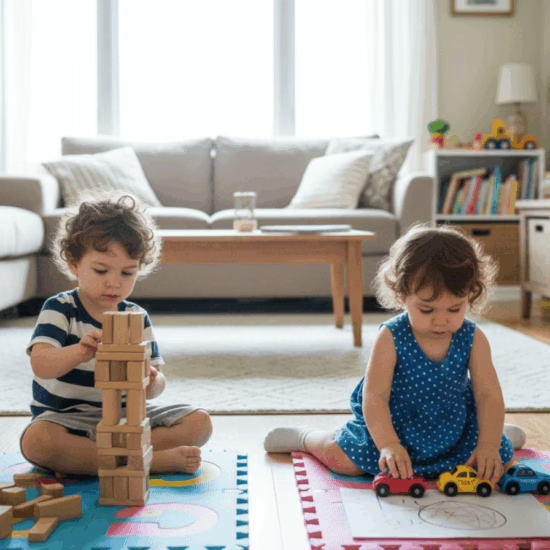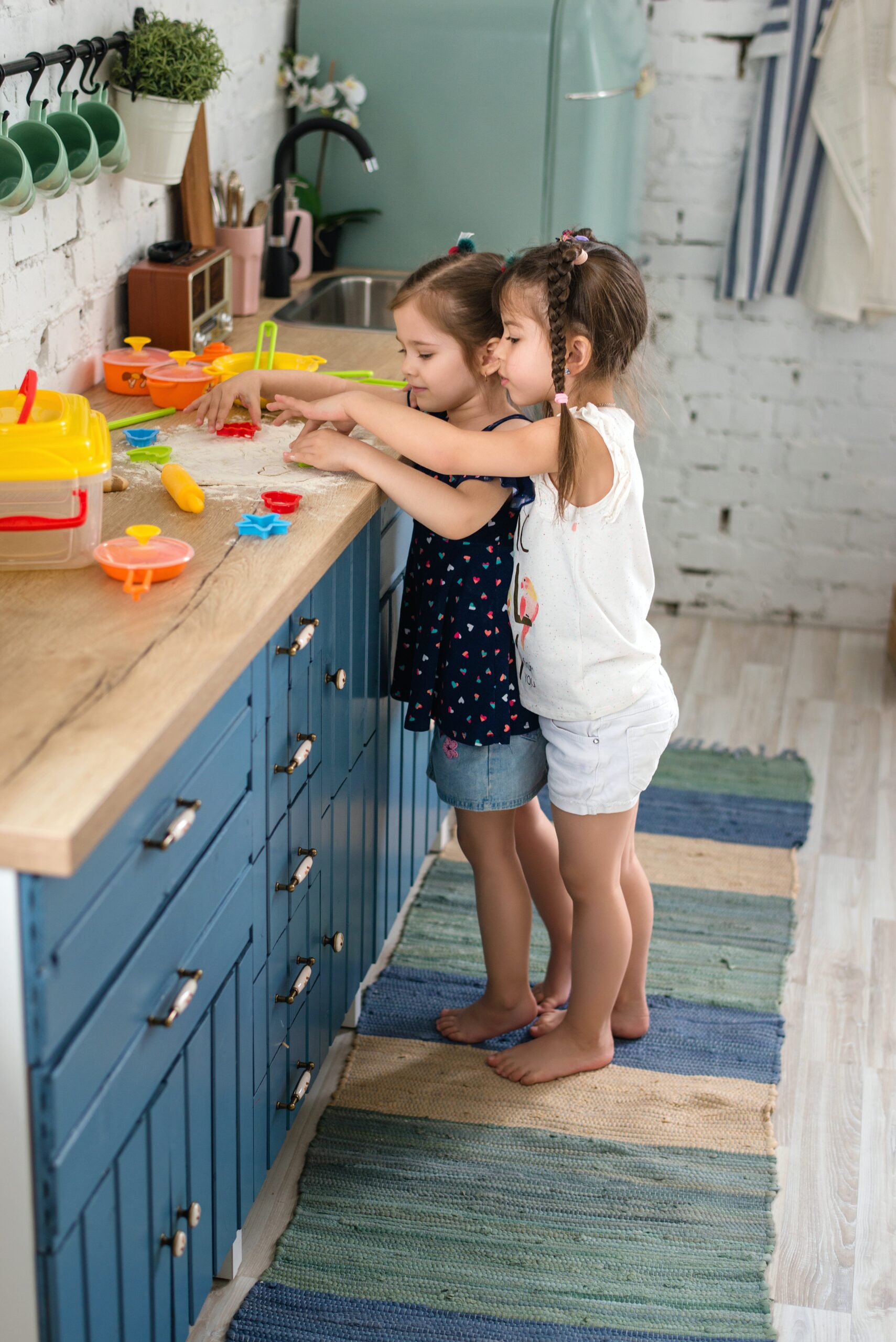
When you first learned you were pregnant with twins, triplets, or more, you probably dreamed of a future where your children were inseparable best friends, a dynamic team sharing everything in life. This vision is beautiful and powerful. But the reality of parenting neurodivergent multiples often reveals that while the bond is strong, the act of sharing can be one of the most significant and difficult skills to master.
For many autistic children, sharing is not an intuitive behavior. It’s a complex social concept that requires an understanding of abstract ideas like turn-taking, delayed gratification, and empathy. When you add the unique dynamics of multiples, the challenge is amplified. Fortunately, there are many practical and compassionate strategies that can help autistic multiples learn to share, fostering not just cooperation, but a deeper and more meaningful connection.
Understanding play for neurodivergent children
To understand how to teach sharing, it’s crucial to first understand how autistic children engage with the world through play. Play is a fundamental part of every child’s development. Through it, they explore their environment, build essential social skills, and learn to express themselves. For autistic children, play might look different from what you expect. It may involve focused, solitary engagement, repetitive behaviors, or a deep fascination with specific objects or a particular part of a toy. This is not a sign that they are not having fun or that they are being anti-social; it simply means their joyful and enriching experience is unique to them. By honoring and supporting their individual play styles, we create a foundation of trust that makes the introduction of shared play possible.
Before diving into tips, it’s helpful to understand the core reasons why sharing with autistic children can be challenging. For many, a strong need for routine and predictability is a cornerstone of their comfort. When a desired object is taken away, even temporarily, it can feel like a profound loss of control and a violation of that predictability. There can also be a lack of object permanence in some cases, where a child might fear that if a toy is given away, it is gone forever. This is compounded by the fact that twins may have identical interests and an equally intense desire for the same item at the same time, leading to frequent conflicts. These are not behavioral flaws, but rather neurological differences that require a mindful and patient approach.
Tips to encourage sharing
Teaching autistic twins to share is a process, not a destination. It requires consistency, empathy, and a toolkit of strategies that go beyond a simple “you must share.”
The power of modeling and taking turns
One of the most effective ways that neurodivergent children learn is by observing and copying the behavior they see around them. As a parent, you are your children’s most important teacher. You can show them how to share by taking turns yourself. For example, when playing a game, explicitly say, “My turn to roll the dice,” and then, “Your turn to roll the dice.” You can even do this with a partner, modeling the behavior with a spouse or another caregiver. Another simple example is sharing a snack with them, taking a piece and then offering them one, saying, “I’m sharing with you.” This kind of consistent, visible modeling shows them exactly what sharing looks like and helps to normalize the concept.
The impact of positive reinforcement
When your twins do share, no matter how small the act, offer them lots of praise and positive reinforcement. This can be as simple as saying, “Great job sharing that block with your sibling!” or “Thank you for waiting your turn. That was so kind.” This direct and specific praise helps them connect the action of sharing with a positive outcome. For multiples who are motivated by privileges or small rewards, you can create a reward chart. Every time they successfully share, they get a sticker, and after a certain number of stickers, they earn a special privilege. This reinforces the behavior and makes the act of sharing feel worthwhile and rewarding.
Creating opportunities for controlled turn-taking
For children who struggle with the unpredictability of sharing, creating a predictable system for turn-taking can be a game-changer. An easy way to introduce this is with simple games that have a clear start and end. Playing catch with a soft ball, rolling a car back and forth, or even using a see-saw at the park all require natural turn-taking. Many board and card games, with their explicit rules for turns, are perfect for practicing sharing skills in a structured and fun way. Start with very short turns and gradually increase the length of the turns as your children become more comfortable with the concept.
The magic of duplicates
As many parents of multiples know, sometimes the easiest path to peace is simply having more than one. If you have a toy that is a well-loved favorite by both children, it may be necessary to have two. While this can be a difficult solution for large or expensive items like televisions or tablets, it is a very practical and effective strategy for smaller toys, books, or even special blankets. You can often find gently used toys for good prices on social media marketplaces or children’s consignment stores. Having a duplicate removes the source of the conflict entirely and allows your children to engage in parallel play without the stress of needing to share.
Leveraging visual supports
Visual supports are an invaluable tool for helping autistic children understand abstract concepts like sharing. You can create a visual schedule or a social story that shows when each child gets to play with a specific toy. For example, a simple chart with your twins’ photos and a picture of the toy can clearly show “Sam’s Turn” followed by “Alex’s Turn.” You can also use a visual timer to indicate when it’s time to switch toys. Seeing the time tick down provides a clear, predictable cue that removes the ambiguity and anxiety from the transition. These visual cues give children a sense of control and clarity, which can greatly increase their willingness to cooperate.
Beyond the toy: Fostering sibling connection
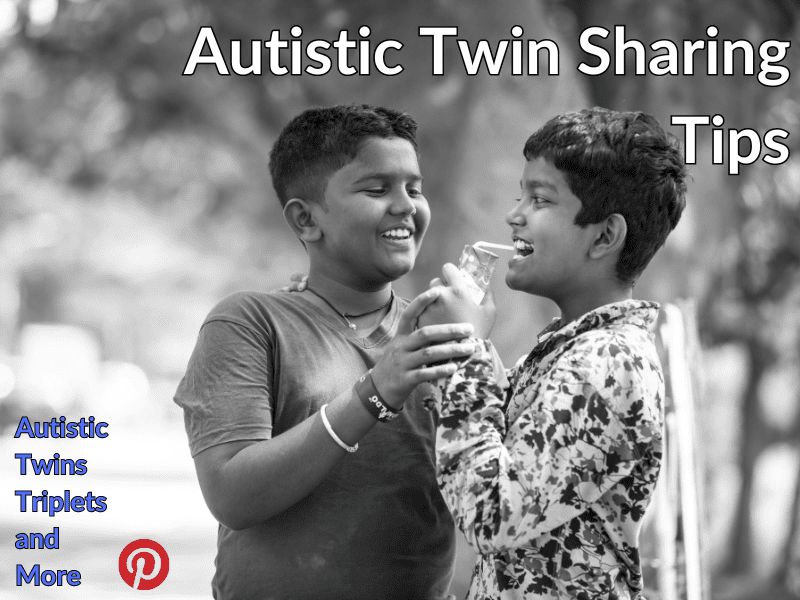
Ultimately, the goal of teaching sharing isn’t just about the toys; it’s about fostering a healthy and positive relationship between your children. Co-parenting through this journey is also vital. A shared, consistent approach between parents and caregivers ensures that your twins receive the same messages and expectations. By working as a team, you can provide a united front of patience and understanding.
Remember that sharing is a learned behavior, and for your autistic multiples, it might be a much more difficult skill to acquire. There will be days of frustration and tears, but with consistent practice and a positive attitude, you can guide them toward a place where they feel secure and connected. The true reward isn’t the toy being shared, but from knowing you are helping your children with independence skills they will need throughout their life.
What is sharing like in your house? Share your best tips and tricks with our community in the comments below.
Subscribe for the latest news and updates!
This website uses affiliate links. We may make a small commission from purchases when you use these links, at no additional cost to you. As an Amazon Associate we earn from qualifying purchases. We sometimes use AI to streamline content creation, allowing for the rapid production of high-quality content tailored for our audience.