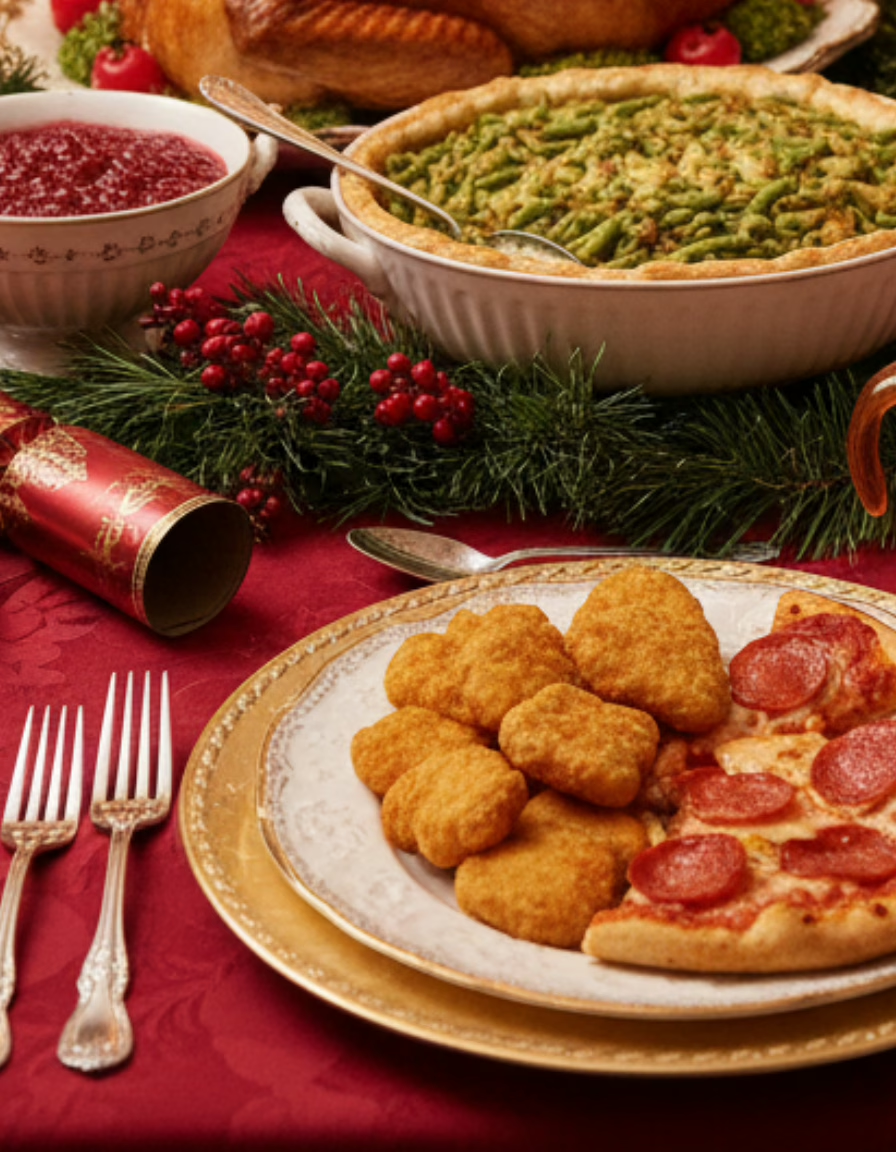
The holiday season often arrives with a pre-packaged set of expectations that make autistic families feel like we’re not doing it right! We are told that we must serve certain foods, we must wear certain clothes and we must attend certain events. But if you are raising autistic multiples, that is often a recipe for a sensory disaster that leaves everyone exhausted, overwhelmed, and hungry. This year, we decided to pack away the complicated recipes. In our house, we are serving chicken nuggets and pizza – and it’s the best decision we have ever made for our collective mental health.
The reality of the “traditional” holiday meal is that it is a sensory overload. With autistic twins, you might have one that only likes crunchy food, and one that will only eat everything covered in gravy. Then you have the visual clutter of centerpieces and extra place settings. There are the complex, mingling smells of stuffing, gravy, and roasted meats that can trigger an immediate “flight” response. Not to mention the social demand—the expectation to sit still, use specific utensils, and tolerate the proximity of others for an extended period. The energy required to “manage” the meal far outweighs any enjoyment found in the food itself. You don’t have to cling to the tradition of the “big dinner,” when December itself is already a whirlwind!
Why this was the year for change
Abandoning the traditional menu wasn’t an admission of defeat, but rather an act of understanding and accommodation. For years, we tried the “one bite” rule or the gentle encouragement to try the festive foods we spent hours preparing. We fell into the trap of thinking that if we just found the right recipe or the right seating arrangement, we could achieve that cinematic holiday moment. However, parental burnout doesn’t usually happen because of one big event; it happens because of the accumulation of these small, failed expectations. We were burning ourselves out at the stove and then burning our remaining patience trying to coax our children to eat things that felt physically unsafe to their sensory systems. By choosing a “safe” food like chicken nuggets—a food that is predictable in texture, color, and taste—we removed the primary source of anxiety from the table.
There is a specific kind of peace that settles over a home when the “demand” is lowered. When your autistic triplets saw their familiar nuggets, there was a visible shift in their body language. The fancy table settings remind us it’s Christmas, but do you know what? If they can’t handle that, it’s ok too! They engaged in their own way, through shared glances and the comfort of a routine that felt safe.
This shift also allowed us all to participate in the holiday in our own ways. In previous years, one of us was always in the kitchen or hovering near the table like a nervous air traffic controller, waiting for the meltdown. We were so busy monitoring their sensory intake that we forgot to enjoy the holiday ourselves. This year, the “prep” took ten minutes. The “cleanup” was minimal. This reclaimed time was channeled back into the family. Instead of scrubbing roasting pans, we were on the floor playing with new toys. Instead of feeling resentful that our hard work was “rejected,” we felt successful because our children were regulated and happy.
An inclusive holiday
We often talk about “inclusion” during the holidays, but true inclusion isn’t about forcing someone to fit into a neurotypical mold. It is about reshaping the environment to fit the person. If the goal of a holiday meal is connection and celebration, then the specifics of the food shouldn’t matter as much as the emotional state of the people eating it. Your autistic twins don’t care about a three-course meal, but they do care about feeling understood. They care about a home where they don’t have to “mask” their sensory aversions just to please an invisible standard of holiday etiquette.
For other parents of twins who are currently staring at a complicated grocery list and feeling a rising sense of dread, I want to offer you the same permission we gave ourselves. The traditions that make you miserable are not worth keeping. Your children will not remember the specific menu of December 2025, but they will remember the feeling calm and safe at home. They will remember that their parents weren’t stressed and angry. They will remember that they were allowed to be themselves. If that means serving nuggets, or crackers, or plain pasta while you wear your best clothes and use your grandmother’s silver, then do it.
The “magic” of the season is often found in the moments we stop trying to be the “perfect” family and start being the family we actually are. Our family is loud, our family is neurodivergent, and our family eats processed chicken. There is beauty in that honesty. It is a rejection of the burnout-inducing “shoulds” that plague parenting. We are no longer performing for an audience of extended family or social media followers. We are creating a life that works for the people inside this house.
Time for change
As we move toward the end of the year, we are looking for more ways to apply this “nugget philosophy” to our lives. Where else are we forcing expectations on our “nugget” reality? Whether it is the duration of a visit to see Santa or the number of lights on the tree, we are learning to measure success by the regulation of our children rather than the traditions of the past. Parental burnout thrives in the gap between expectation and reality. By closing that gap—by making the reality the expectation—we have found a way to survive the holidays with our joy intact.
So, if you pass by our house this evening, you might see the glow of the candles and the sparkle of the good crystal. You might think we are having a traditional feast. In a way, we are. We are feasting on what makes the holidays joyful for our family. We are celebrating the fact that our children are eating and feeling safe.
What traditions have you created in your autistic twin family? Share your stories in the comments below.
Subscribe for the latest news and updates!
This website uses affiliate links. We may make a small commission from purchases when you use these links, at no additional cost to you. As an Amazon Associate we earn from qualifying purchases. We sometimes use AI to streamline content creation, allowing for the rapid production of high-quality content tailored for our audience.