Halloween. For many families, it’s a magical blend of crisp autumn air, glowing jack-o’-lanterns, and the thrill of dressing up. But for parents of autistic multiples, this holiday can feel less like magic and more like planning a war campaign. The truth is, when you’re managing multiples with different neurotypes through a cascade of flashing lights, abrasive fabrics, loud doorbells, and sudden screams, the exhaustion is profound. We know you feel lonely and misunderstood, often battling the expectation of a “normal” holiday while navigating the real needs of your children.
But don’t feel that you have to skip the fun! Instead, reclaim it by prioritizing comfort, predictability, and sensory safety. Ditch the idea of a perfect, Instagram-ready Halloween and focus instead on crafting an experience that truly supports your autistic twins, triplets or quadruplets.
Deconstructing the costume conundrum
The costume is often the first and greatest hurdle. Long before you step out the door, the very fabric and fit of a store-bought outfit can trigger immediate distress. For a child with tactile sensitivity, that scratchy polyester tag or stiff seam isn’t just annoying—it feels like sandpaper grating against their skin.
When dealing with autistic twins, the costume problem is compounded because their sensitivities might be diametrically opposed. One twin might be a sensory seeker who loves the deep pressure of a heavy, tight costume, while the other is a sensory avoider who needs lightweight, loose-fitting material. Trying to convince one to wear a heavy cape and the other to tolerate a mask can feel impossible.

The key here is flexibility. Start the conversation about costumes weeks in advance, and let go of the traditional expectations. If a full costume causes anxiety, opt for comfort clothes first. Think soft, tagless layers—even if that means they wear their favorite sensory clothing underneath. A soft cotton tracksuit in a specific color can be a fantastic base.
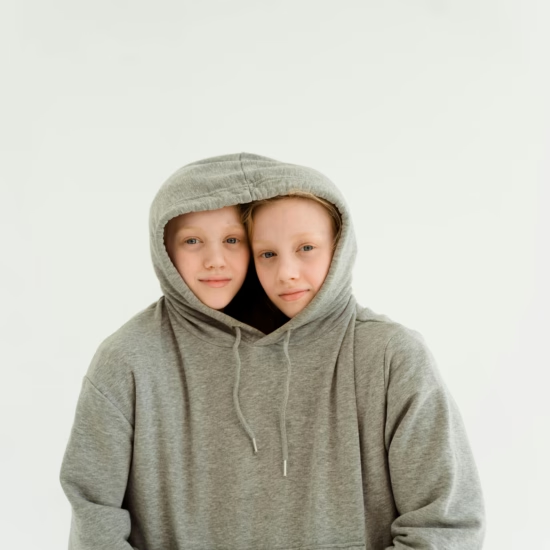
You can then build the costume around their comfort. If your child loves trains, let them wear their comfy pants and simply pin a felt train shape to the front, or have them wear a quiet noise-canceling headset that matches their engineer uniform. The concept of the costume is what matters, not the execution. For the twin who seeks pressure, consider adding a weighted vest or a heavy, soft blanket under the costume to provide that calming input they crave. Conversely, for the avoider, ensure all seams are turned inside out and use a soft, seamless t-shirt as the base layer. Remember, the goal is acceptance: if their “costume” is just their favorite blue hoodie, that’s okay. They are still celebrating.
The anxiety of the unknown: Mastering routine and social scripts
Halloween involves massive disruption to a typical evening routine, and this lack of predictability fuels anxiety in autistic individuals. The social demands of trick-or-treating—knocking on a stranger’s door, making eye contact, saying “Trick-or-Treat” or “Thank you”—can be overwhelming, especially when managing the energy of two children who may respond very differently to social demands.
To combat this, create a detailed, personalized visual schedule that outlines the evening’s events hour by hour. This schedule should include pictures or symbols for: putting on the costume, eating dinner, the car ride, ringing the first doorbell, receiving candy, and the bedtime routine.
Alongside the visual schedule, use a social story to walk your twins through the specific, expected social interactions. The social story should be short and simple: “When we walk to the door, we will hold Mom’s hand. When the door opens, we look at the person’s belt buckle. Mom will say, ‘Trick-or-Treat.’ Then we put our hand out for candy and say, ‘Thank you.'” Practicing this script through role-playing in the weeks leading up to Halloween will help decrease their Halloween social anxiety on the actual night. Have them practice ringing a bell and opening your front door multiple times.
Crucially, define the expectations for your children individually. If one twin is non-speaking or prefers not to engage socially, their social story should clearly state: “It is okay to stand next to Mom quietly. I can use my communication card to show ‘thank you.'” Never force an interaction that causes distress; validating their need for quiet withdrawal is more important than achieving a neurotypical social exchange.
Mitigating overload: A twin strategy
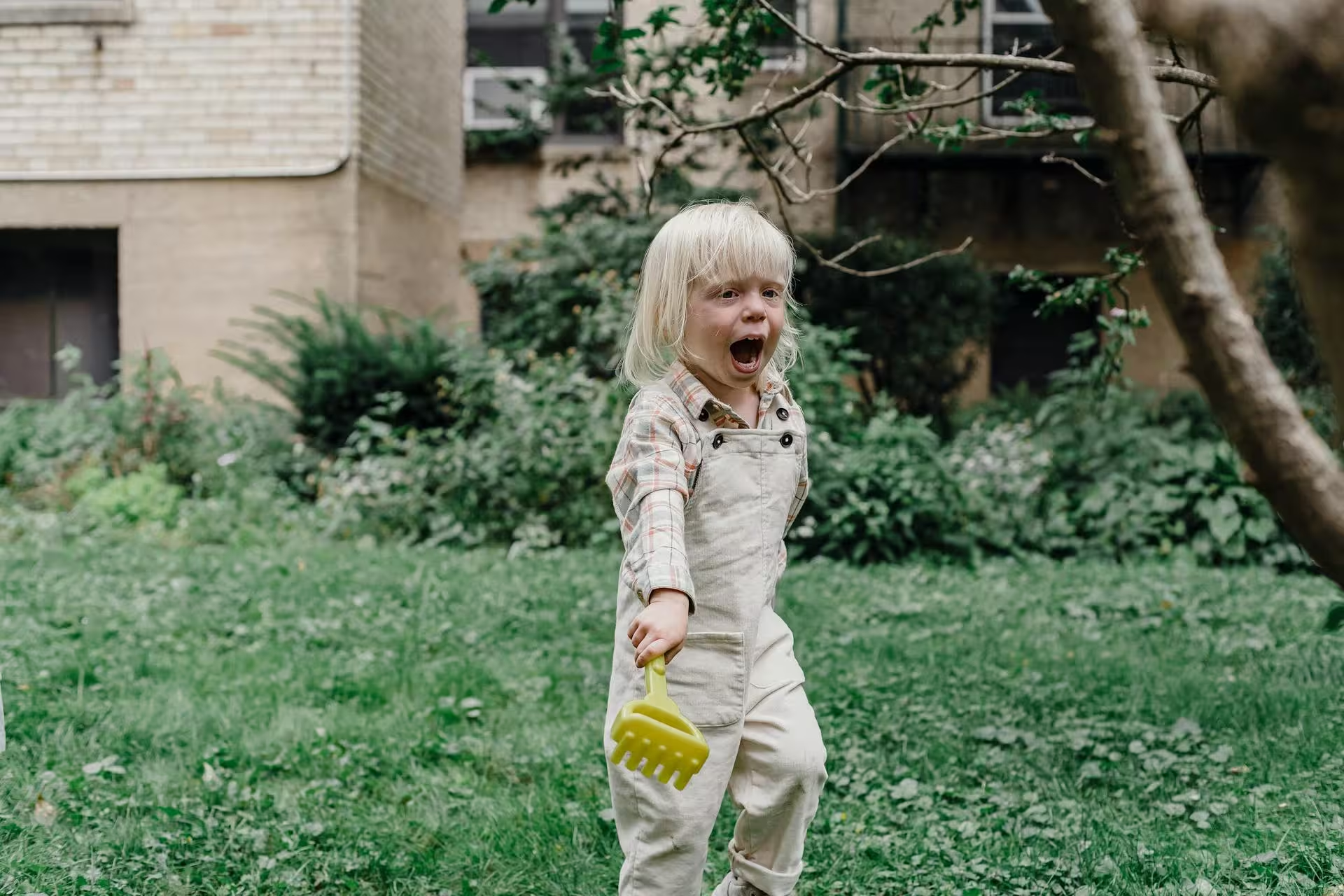
The core of the sensory overload challenge is the sheer volume of unexpected input. The high-pitched shriek of a motion-activated decoration, the sudden ding of a doorbell, the smell of woodsmoke from a bonfire, or the glare from neon lights can be deeply dysregulating. When one twin goes into meltdown, the other’s own anxiety can quickly spiral, leading to a disastrous evening for everyone. The first step is to be prepared with your sensory toolkit.
For issues with sound, invest in good quality noise-canceling headphones or ear buds for both children. Even the sensory seeker may benefit from dampening background noise while focusing on the visual excitement. If doorbells are a major trigger, bring sticky notes to cover the bell, or use a flashlight to tap on the door instead of ringing. For light protection, use amber-tinted sunglasses or a tinted visor. Plan your route to avoid houses that are known for strobe lights or over-the-top, loud decorations.
You may find it easier to ask your coparent or a friend or family member to help you manage with autistic multiples. Their sole job can be to manage one child, allowing you to focus entirely on the other’s needs, reducing your cognitive load instantly. If your multiples have fundamentally opposite needs (one needs to stay out late and see every house, the other needs a 15-minute quick pass), consider splitting up. One parent takes the quiet twin on a shorter, specific low-stress trick-or-treating route to just three predetermined houses, while the other parent takes the louder, seeking twin on a longer, more stimulating route. This respects both their needs and provides a clear predictable routine for the child who needs shorter activity times.
Finding joy in autism friendly alternatives
Sometimes, after all the planning and preparation, the energy is simply too much. It’s vital to have a Plan B that feels like a celebration, not a consolation prize. If just one or all of your multiples decide that the neighborhood chaos is simply not for them, embrace the autism-friendly alternatives at home.
The best Halloween celebrations are built around your children’s special interests. If they love animals, create a themed living room sanctuary based on nocturnal creatures. If they love counting and sorting, let them sort the handful of candy you bought into colors, shapes, or types. Instead of trick-or-treating door-to-door, hide Halloween treats in predictable, familiar spots around the house. If you are worried about sugar, try some non-candy Halloween treats instead. This provides a clear, contained sensory experience (the joy of finding a treat) without the overwhelming environment.
For a calming Halloween at home environment focused on regulating input. Think soft lighting (non-flashing lamps or dim battery-powered candles), familiar comforting music, and a themed sensory bin filled with dried beans, pumpkin seeds, and plastic spiders. This allows them to experience the themes of the holiday in a safe, controlled way.
Remember, the true meaning of the holiday is fun and connection. If your multiples are happy, regulated, and spending quality time with you, you have succeeded. Being a parent to autistic multiples means constantly redefining what “success” looks like, and on Halloween, it means prioritizing their internal comfort over external performance. Let go of what you think the holiday should be, and embrace the joy of what it can be for your beautifully unique family.
How do you celebrate Halloween with your autistic twins, triplets or quadruplets? Share your stories in the comments below.
Subscribe for the latest news and updates!
This website uses affiliate links. We may make a small commission from purchases when you use these links, at no additional cost to you. As an Amazon Associate we earn from qualifying purchases. We sometimes use AI to streamline content creation, allowing for the rapid production of high-quality content tailored for our audience.