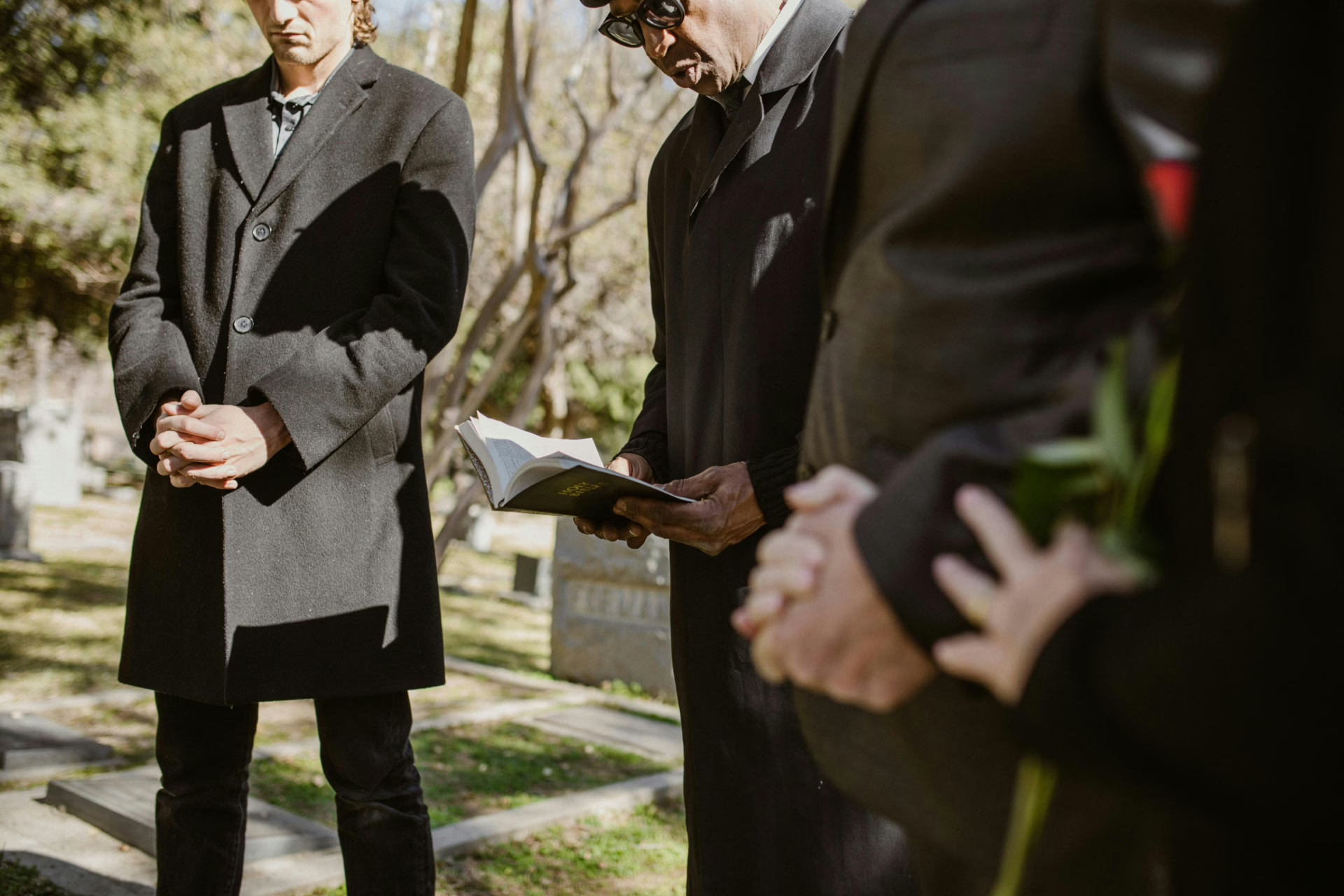
This September, our family is attending both a wedding and a funeral, and it got me thinking about how to best prepare my autistic son for these events. Family events, such as weddings, funerals, or other milestone celebrations, often bring a mix of anticipation and trepidation for parents of autistic multiples. The joy of gathering with loved ones can be overshadowed by the quiet dread of potential ‘disruption,’ sensory overload, and the sheer unpredictability of it all. As parents of autistic twins, triplets, or more, you’re not just managing one complex nervous system, but two or even three (or more!) simultaneously, all while trying to remember who is who and generally being ‘on’ for hours. This guide offers practical tips, actionable strategies, and a healthy dose of self-compassion to help you navigate these challenging situations successfully.
Why big events are such a challenge
Before we get to the practical stuff, it’s important to understand why these events are so challenging. They are, quite simply, sensory minefields. A wedding can be a full-on assault with loud music, flashing lights, strong perfumes, and scratchy clothes. A funeral brings its own set of challenges, with solemn clothing, hushed tones, unfamiliar hymns, and crowded, emotionally charged rooms. And with autistic multiples, you might have one twin who is overstimulated by noise and another who is under-stimulated by movement, requiring completely different interventions simultaneously. This isn’t a matter of them being ‘naughty’ or ‘difficult’; their nervous systems are genuinely struggling to cope with an environment that feels profoundly unsafe or overwhelming.
Beyond the sensory chaos, these events are a major disruption to routine, which can be a lifeline for our children. Travel, different bedtimes, new foods, and altered schedules create a perfect storm for anxiety and dysregulation. The social and emotional complexity is also immense. Trying to understand nuanced social cues at a wedding or the unspoken rules of a funeral can be confusing. To top it all off, these events are packed with unknowns—new people, new places, new rules—and the constant internal question of “What’s going to happen next?” can cause anxiety to skyrocket.
Amidst all this planning, there’s a deeply personal challenge that can arise: the difficult conversation around whether your twins are actually invited, or indeed, should attend at all. It’s a situation many of us have faced, whether due to a ‘child-free’ wedding preference, concerns about a child’s ability to cope, or the sheer solemnity of a funeral. This can sting, profoundly. If one or both of your twins aren’t invited, or if you make the difficult decision that attending would be detrimental to their well-being, acknowledge those feelings of hurt and exclusion.
Then, shift to proactive planning: Can you arrange for a trusted babysitter to be with them in a familiar environment? Could one parent attend while the other stays home, perhaps joining only for a short, less intense part of the event? This allows one parent to be present for loved ones while protecting the children’s needs. Sometimes, the most supportive action is to create an alternative plan that ensures everyone’s needs are met, even if it’s outside the main event. Your primary responsibility is to your family’s overall well-being.
Pre-event reconnaissance
Preparation is not just key; it’s a requirement for parents of autistic multiples. The more information you have beforehand, the better you can prepare your children and yourselves. Start by gathering intelligence from the event organizers. Get a detailed schedule, not just “ceremony, then reception,” but a minute-by-minute breakdown. Ask about the venue: Is there a quiet room available? Where are the exits? Can you bring your own safe foods? This information will empower you to create a predictable experience for your twins.
Your best tools for this are visual schedules and social stories. Use photos of the actual venue if you can, and go through the schedule repeatedly in the days leading up to the event. Role-play scenarios like, “What happens if the music is too loud?” to practice your exit strategy.
Next, assemble your sensory toolkit, your personal weapon against chaos. This should include all the items you might need to help regulate your children’s nervous systems. Think noise-cancelling headphones, a discreet fidget toy, a favorite blanket, or a weighted lap pad. You might also consider a tablet or audio book with headphones for distraction. For oral fixation, pack chewy sweets or a crunchy snack. For visual overload, sunglasses can be a lifesaver. And for overwhelming scents, a few drops of essential oil on a tissue can provide a familiar, grounding aroma. If possible, involve your autistic multiples in packing their sensory toolkit, giving them an additional sense of control over the day. Having these items ready and accessible means you can intervene before dysregulation begins.
The big day
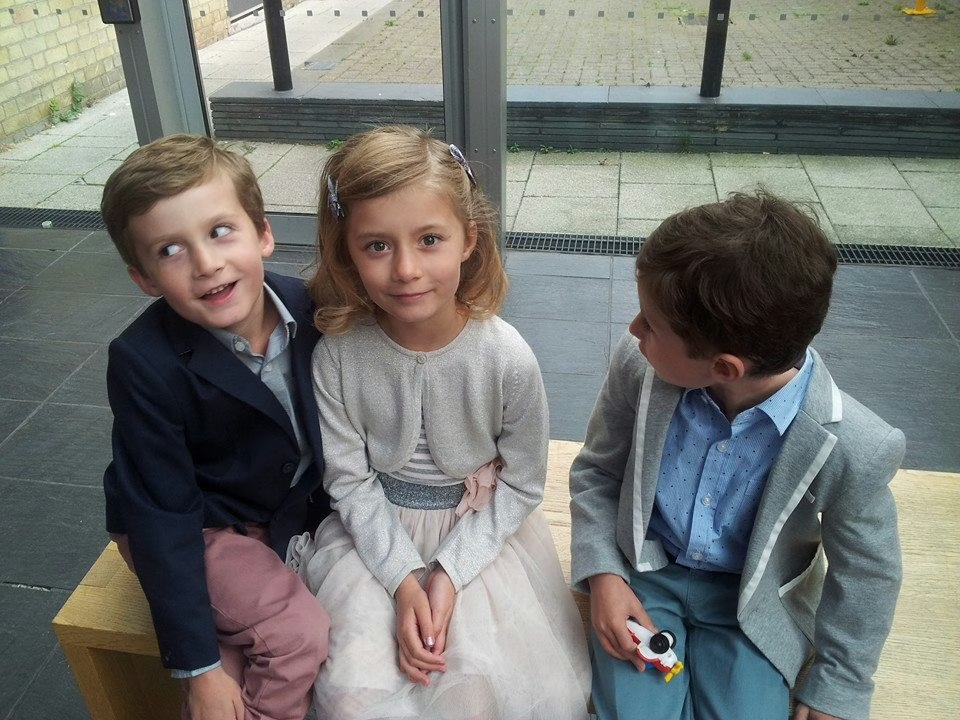
You’ve planned, you’ve prepped, and you’ve probably had a minor meltdown yourself. Now it’s game time. The first rule is to prioritize comfort over perfection when it comes to clothing. If that beautiful, scratchy dress or stiff suit is going to cause problems in five minutes, it’s not worth it. Opt for soft fabrics and elasticated waistbands.
It’s also crucial to pack your own safe foods and drinks, as you can’t rely on the catering. A hangry autistic twin (let alone two) is a force to be reckoned with, and food is often a critical factor in regulation.
Once you arrive at the venue, take a look around for potential quiet zones. If you have a partner or another trusted adult, embrace the tag-team approach. One parent can take Twin A for a sensory break while the other stays with Twin B. You can pre-arrange breaks for yourselves as well, because even 15 minutes of silence in the car can feel like a spa day. Most importantly, embrace the exit strategy. Know exactly where you can go for a break—a quiet room, the car, an outdoor space. Don’t be afraid to make a graceful exit, even if it’s early. Your family’s well-being is more important than politely enduring a meltdown.
Weddings vs. funerals: Nuances and specific strategies
While the core principles are mostly the same, these two events require a slightly different approach. At a wedding, the challenges are often centered on noise and crowds. During the ceremony, you can arrive just for the key parts and sit near an exit. For the reception, look for outdoor areas or quiet corners where your autistic triplets can have a sensory break from the music and speeches. If it is possible, speak to the couple beforehand to ask about a designated quiet space or “chill-out zone” that you can use.
A funeral presents unique emotional and social challenges. You will need to use simple, concrete language to explain what is happening, and you might need to prepare your twins for the sight of people crying. It’s okay to coach them on how to politely decline a hug from a well-meaning relative. The goal is to manage the solemnity while still allowing your autistic twins the space to process their own feelings. And Next Comes L has some great resources for helping your child understand death and funerals.
When navigating a funeral with autistic twins, the graveside ceremony presents a unique and often overwhelming set of challenges. This is typically a very emotionally charged and sensory-heavy part of the day, with hushed tones giving way to unexpected bouts of crying, and a stillness that can be unnerving for a child who needs movement. It’s perfectly okay—and often the most compassionate choice—to opt out of this specific section.
Your autistic multiples may be overwhelmed by the formality. They may feel overwhelmed by the unpredictable emotions. They might also struggle with the physical constraints of standing still for a long period. Instead of forcing them to endure a situation that could lead to a meltdown, you might choose to wait in a quiet, accessible area nearby, perhaps in the car with a favorite toy or snack. This allows you to honor the moment from a distance while prioritizing your children’s well-being and preventing a stressful situation for everyone. Remember, your presence in a later, more manageable part of the day, like a reception, is just as meaningful, and protecting your family’s peace is the most respectful thing you can do.
The post-event debrief: Recovery and reflection
You did it. You survived. Now, what? The first step is to prioritize recovery. Schedule a “downtime day” with minimal demands and lots of comfort food. Re-establish your normal routine as quickly as possible. This is also a crucial time to process emotions for both you and your multiples. Talk about what happened, what they liked or disliked, and how they felt. Most importantly, practice self-compassion. Did a twin stim loudly during a quiet moment? Did you have to leave early? Let it go. You did your best, and your children’s needs came first.
Ultimately, you are the world’s leading expert on your family. We hope this has provided a framework, but always trust your gut. There will be days when the best strategy is to stay home, and that’s a perfectly valid choice, too. These big family moments are significant, but so is your family’s daily well-being. By being prepared, proactive, and compassionate, you can navigate these complex events, create lasting memories, and most importantly, show your autistic twins that they are loved and supported, no matter how loud the world gets. And if you need a place where you’re truly understood in all this, well, you know where to find us.
Have you attended a significant family event with your autistic multiples? Share your stories in the comments below.
Subscribe for the latest news and updates!
This website uses affiliate links. we may make a small commission from purchases when you use these links, at no additional cost to you. As an Amazon Associate we earn from qualifying purchases. We sometimes use AI to streamline content creation, allowing for the rapid production of high-quality content tailored for our audience.