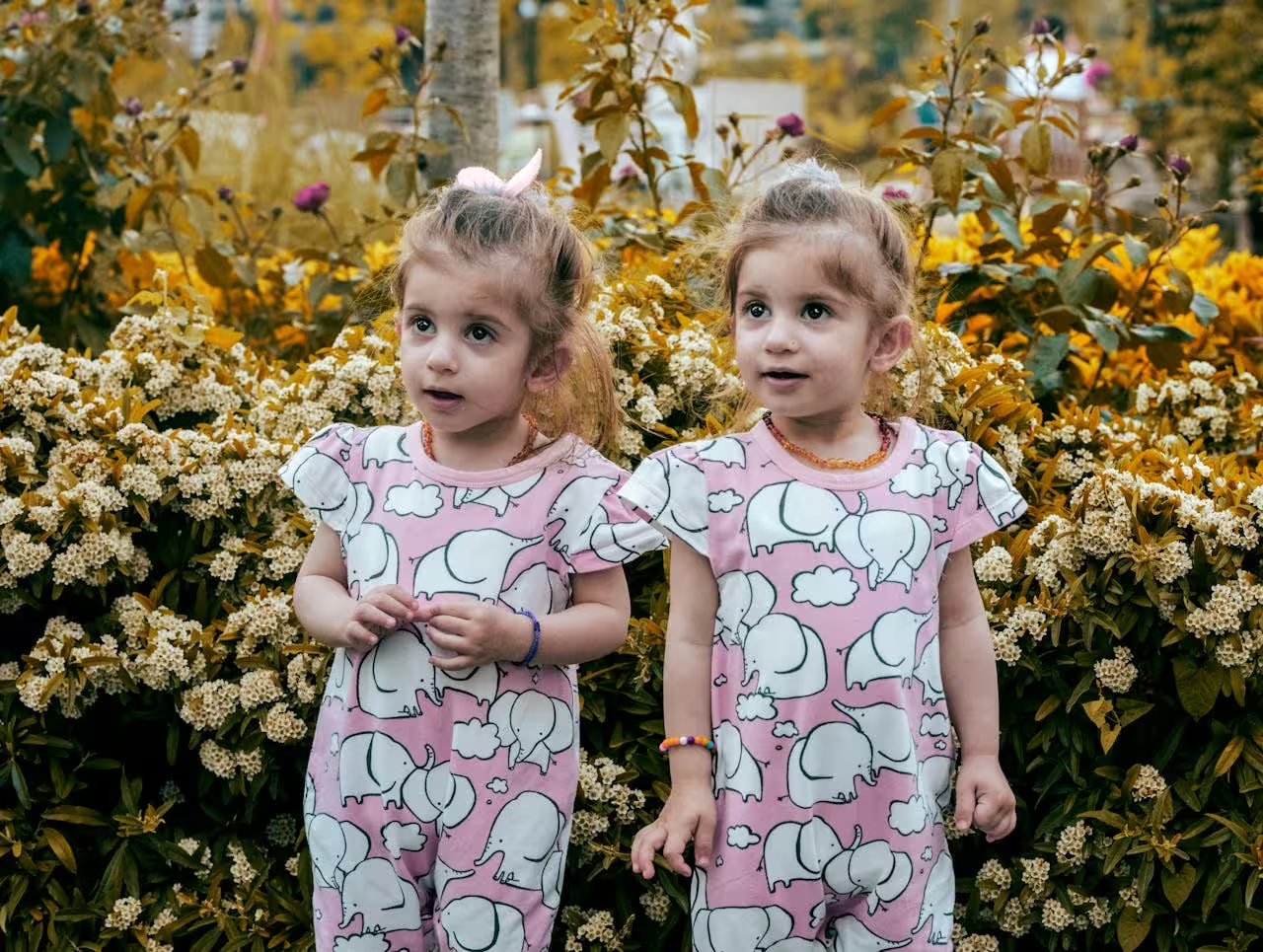
One of the most frequent questions we hear in the Community is, “Will my autistic twins ever speak?” It’s a question rooted in a deep love and desire to connect with your children, and it’s accompanied by a unique set of concerns when you’re raising multiples. While none of us have a crystal ball to see into the future, the good news is that most children, including those who are autistic, will develop language skills and find a way to communicate, even if that path is delayed or looks different from typical development.
This article is designed to be a comprehensive and compassionate guide for parents navigating the journey of speech development in autistic multiples. We’ll explore the unique factors that can impact language in multiples, offer practical, actionable strategies you can implement at home, and provide reassurance that every form of communication is a cause for celebration.
Speech development in children
What are the building blocks of speech you should be looking for? First will be vowel sounds or “cooing”. Typically developing babies will start making sounds like “oo” or “ah,” around 2-3 months old. Next is babbling, where babies combine consonants and vowels to create sounds like “mamama” or “bababa.” This usually occurs around 6-9 months. Between 10-12 months old, babies typically start to say their first single words, such as “mama,” “dada,” or “ball”, while around 18-24 months old, children start to combine words to form simple phrases, such as “dada home” or “go outside.”
It’s important to know that twins, triplets, and quadruplets are more likely than single births to experience a speech delay. In fact, 82%of our survey respondents told us that their autistic multiples received speech and language therapy. Researchers have identified a “twinning effect” in language, noting that by 24 months old, twins are more likely to have a smaller vocabulary and say fewer words than their non-twin peers. The good news is that they typically catch up with their peers over time, but understanding the potential causes can help you support your children from the very beginning.
One primary factor is premature birth. According to our 2024 survey, 27% of respondents had their multiples at 32 weeks or earlier, 16% at 33-34 weeks, 31% between 35-36 weeks and 27% at full term (after 37 weeks).
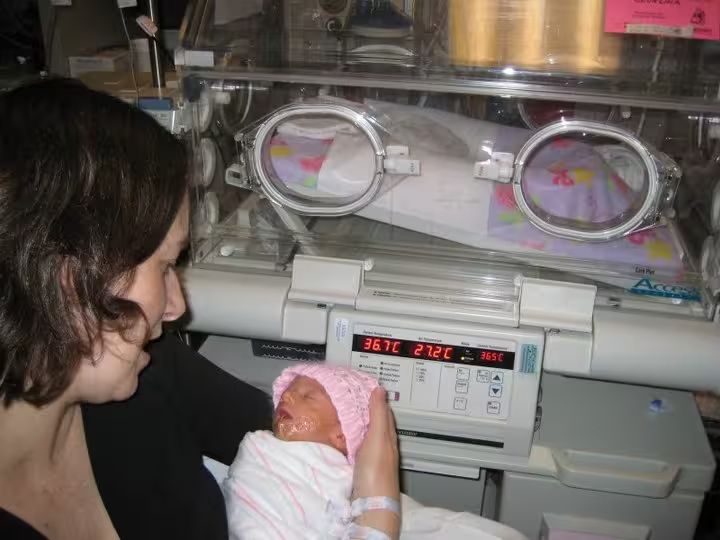
These early arrivals are still in a crucial stage of growth and development, which can affect later speech milestones. Additionally, premature babies may spend time in the neonatal intensive care unit (NICU), where they may not receive the same amount of one-on-one time or consistent language stimulation as full-term babies at home. For twins who are in the NICU, the experience can be a chaotic and overwhelming start, potentially impacting their readiness to engage with and process language.
Another theory is that multiples, simply by virtue of having a sibling who is always present, may spend less individual time with parents, therefore impacting their exposure to adult-level language. While this isn’t necessarily a bad thing—children with siblings have the chance to learn and model behavior off their brothers and sisters—they may learn immature speaking skills or develop their own unique communication patterns. You may also find that in a twin pairing, one child is more dominant or assertive, while the other twin is more passive or shy. In these instances, one twin may “speak” for the other, anticipating their needs or completing their sentences. While this is a common and often loving way for them to bond, it can unintentionally hinder the language development of the quieter twin.
You may find that one twin is more dominant or assertive, while the other twin is more passive or shy. In these instances, one twin may “speak” for the other, or the twins may develop their own communication patterns that differ from normal speech. Although it is not necessarily a bad thing when one twin speaks for another, as it is a way they bond with and support each other. However, you don’t want it to affect their language use and development in the long term.
Is there such a thing as twin language? Although not a different language per se, some twins may develop their own unique vocabulary or jargon. This is most likely because they spend a lot of time together and may be able to understand each other, when outsiders cannot.
Autism and speech development
Gestalt language processing is a model of language learning that describes how children learn in chunks or phrases, rather than individual words. While not exclusive to autism, many autistic children are Gestalt language processors. For example, in echoloalia your twins might repeat phrases they’ve heard, often phrases from movies or television.
Selective mutism, which is associated with anxiety, is when one or both twins cannot speak in certain situations. This could be in certain locations such as outside of the house, or with certain people. This is often described as “refusing” to speak, but the twins may be experiencing a fight or flight response from anxiety, which makes it difficult or impossible for them to speak.
Sensory processing disorder can also impact on language skills. Your twins may be over stimulated and not able to concentrate on speech when in an environment that is too overwhelming, or they are exhausted from a prior sensory encounter. They may also have oral sensory issues, which impact on their ability to create sounds and speech. When working with twins who have both sensory processing needs and speech delay, try to ensure sensory needs are met first before attempting to practice speech as they will be much more engaged when they are regulated.
Social and emotional delays associated with autism can also impact on your twins’ speech. If they do not have the same social and emotional development as other children around them, they may miss out on opportunities to converse and learn from their peers.
Encouraging speech development
So how can you help your twins develop their language? Although working with an occupational therapist (OT) or speech therapist may be needed, there is lots you can do at home. Start off just by talking all of the time! Narrate your day. Encourage your twins to imitate your sounds, words, and gestures.
Keep your language simple and clear. Use short sentences and repeat key words. Instead of saying, “Would you like some apple juice?” try saying, “Juice? Apple juice?” This clarity helps them understand and process what you’re saying. Throughout the day, offer choices – “Do you want milk or juice?” – and wait for their response. Encourage them to use words or gestures to express their needs.
Some families find that sign language, Makaton or visual supports are helpful. Try using picture cards, storyboards, or visual schedules. For instance, if you’re working on the word “drink,” show a picture of a cup while you say the word. This helps your twins connect the visual with the verbal.
You can also try playing games that help your autistic triplets communicate. Games like “Peek-a-Boo” or “Simon Says” naturally encourage verbal interaction. Singing nursery rhymes and songs with repetitive phrases is also a fantastic way to build their language skills.
When one twin speaks, and the other doesn’t
This is a common and often challenging dynamic for parents. It’s crucial to remember that each of your children is on their own unique journey. Just because one multiple is non-speaking now, it doesn’t mean they will always be. For those who speak, encourage them to be a communication partner. They can model words and sounds for their sibling, but always make sure to give the non-speaking multiple a voice and agency of their own.
It’s also essential to help non-speaking multiples learn how to communicate through gestures, pointing, touch, or facial expressions. There are countless non-verbal ways of communicating, and validating these forms of expression is vital. A twin who is a proficient communicator can advocate for their non-speaking sibling, but they should never feel like they have to “speak for” them. Empowering the non-speaking twin to use AAC or other supports allows them to express their own needs and build a sense of independence and self-advocacy.
AAC devices range from simple communication boards to sophisticated tablets with specialized software. These tools give your twins a voice and a way to express themselves, even if they aren’t ready to speak verbally. It’s a myth that using AAC prevents a child from speaking. In fact, for many, it reduces the pressure and anxiety around speaking, which can, in turn, lead to more spontaneous verbal communication.
In the end, while our society often values verbal communication above all else, remember that true connection comes from being seen, heard, and understood in whatever way a child is able to express themselves. The goal isn’t to force your children to conform, but to give them the tools to navigate the world and forge their own paths, together.
Did your twins or triplets have speech delays? Share your experiences in the comments below.
Subscribe for the latest news and updates!
This website uses affiliate links. We may make a small commission from purchases when you use these links, at no additional cost to you. As an Amazon Associate we earn from qualifying purchases. We sometimes use AI to streamline content creation, allowing for the rapid production of high-quality content tailored for our audience.